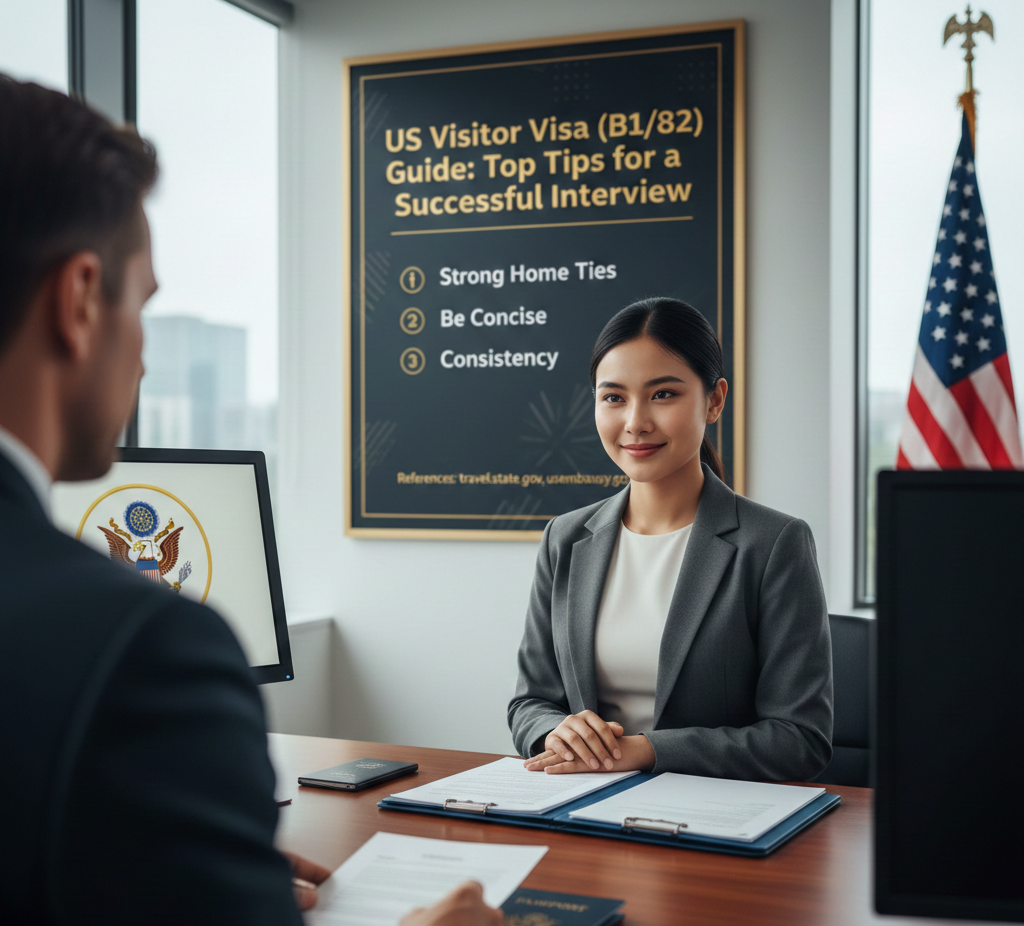
US Visitor Visa (B1/B2) Guide: Top Tips for a Successful Interview
Securing a US Visitor Visa (B1/B2) is often seen as a daunting hurdle, but it essentially comes down to one thing: proving your intent. The consular officer’s job is to ensure that every applicant intends to return to their home country after a temporary stay.
To help you navigate this process with confidence, here is a comprehensive guide on how to ace your interview and maximize your chances of success.
1. Establish Strong Ties to Your Home Country
The most common reason for visa denial is Section 214(b)—the failure to prove that you have a residence outside the US that you have no intention of abandoning. You must demonstrate “strong ties” that compel you to return.
- Employment: A stable job, a letter from your employer, or business ownership documents.
- Family: Having a spouse, children, or elderly parents at home.
- Assets: Real estate, property deeds, or significant financial investments.
- Community: Active involvement in local organizations or long-term social commitments.
2. Be Concise and Direct
Consular officers are under immense time pressure; they often have only 2–3 minutes per interview.
- Get to the point: If they ask “Why are you going to the US?”, don’t start with a long story. Say, “I am going for a two-week vacation to visit the Grand Canyon,” or “I am attending a three-day tech conference in San Jose.”
- Don’t over-explain: Only provide details if asked. Rambling can sometimes lead to inconsistent answers.
3. Consistency is Key
Your verbal answers must match the information you provided in your DS-160 form.
- Review your DS-160 thoroughly before the interview.
- Discrepancies in dates, addresses, or travel history can trigger red flags regarding your honesty.
4. Understand the Purpose of Your Visit
A B1 visa is for business (meetings, conferences, consultations), while a B2 visa is for tourism, medical treatment, or visiting family.
- Be specific about your itinerary.
- Know where you are staying and who you are meeting.
- If you are visiting a relative, know their status in the US (e.g., Green Card holder, H1B visa, etc.).
5. Financial Readiness
You need to show that you can cover the costs of your trip without seeking employment in the US.
- Bring recent bank statements.
- If a sponsor is paying for your trip, be ready to explain your relationship to them and why they are funding you.
- Note: Having a sponsor does not exempt you from the need to show your own ties to your home country.
6. Dress Professionally and Stay Calm
First impressions matter. You don’t need a tuxedo, but dressing “business casual” shows respect for the process.
- Body Language: Maintain eye contact and speak clearly.
- Language: If you are not comfortable in English, you are entitled to an interview in your native language (in most embassies). It is better to be clear in your own language than misunderstood in English.
Comparison: Do’s vs. Don’ts
| Do | Don’t |
| Arrive 15–30 minutes early. | Bring prohibited items (phones/bags) if not allowed. |
| Answer honestly and confidently. | Argue with the consular officer. |
| Bring organized supporting documents. | Force documents onto the officer unless asked. |
| Keep answers brief (30 seconds or less). | Memorize a scripted speech. |
Conclusion
The US visa interview is not an interrogation; it is a verification process. If you are honest, prepared, and can clearly demonstrate that your trip is temporary, you are already halfway there. Focus on your “strong ties” and keep your answers focused on the facts.
Leave a Reply